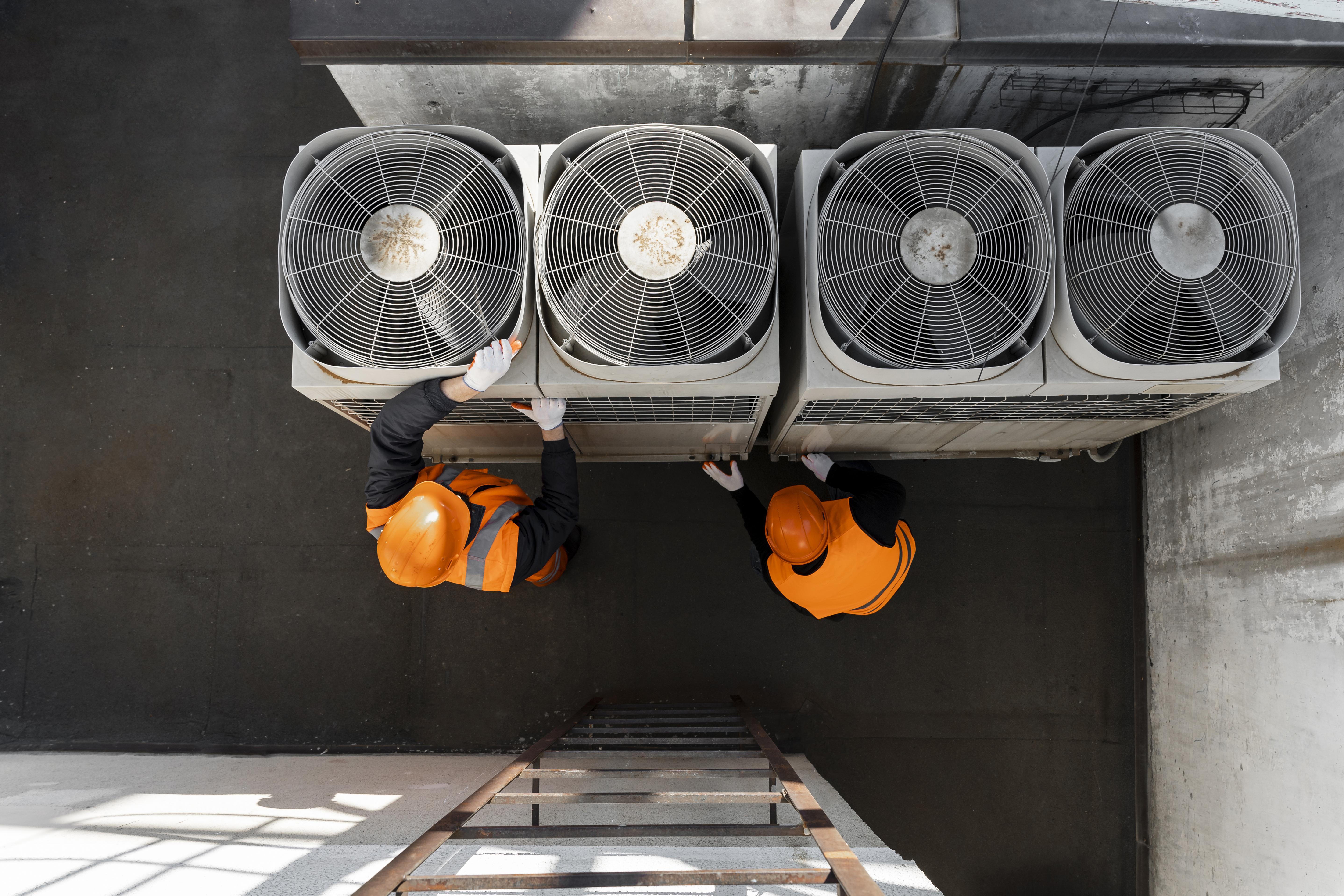
6 Ways to Achieve Energy Efficiency in Industrial Refrigeration Systems
Industrial refrigeration systems and cold storage warehouses are among the biggest energy consumers for businesses because they need to operate continuously, 24/7. In food, pharmaceutical, and logistics facilities, more than half of the total electricity bill usually comes from refrigeration systems.
Given rising energy costs and sustainability goals, increasing energy efficiency in facilities is no longer an option but a necessity. With the right engineering practices and modern technologies, it is possible to reduce energy consumption by up to 30% without compromising system performance. Here are 6 effective ways to achieve energy efficiency in industrial refrigeration systems:
1. Use VFD Compressors and Fans
Compressors in traditional refrigeration systems operate on an "on/off" principle and draw high current from the grid every time they start up. Compressors and fans equipped with Variable Frequency Drive (VFD), or inverter technology, adjust their speed according to the system's needs. When the cooling load decreases, motor speed drops, preventing unnecessary energy consumption and delivering significant savings.
2. Waste Heat Recovery Systems
The cooling process is fundamentally based on removing heat from the interior and expelling it outside. This high-temperature gas released from the condensers is actually a free energy source.
With a waste heat recovery exchanger integrated into the system, this heat that would otherwise be released into the air can be captured and used to meet the facility's domestic hot water needs or to heat administrative offices. In this way, substantial savings are achieved on natural gas or electric heating costs.
3. Smart Automation and SCADA Systems
Managing the system with software rather than leaving it to human initiative is the key to efficiency. Advanced automation and SCADA (Supervisory Control and Data Acquisition) systems;
Optimize the system's operating mode according to nighttime and daytime outdoor temperature differences.
Prevent unnecessary heater operation by determining defrost times based on actual need (sensor data), not on a timer.
Provide the ability to intervene early by instantly detecting possible faults or performance drops.
4. Condenser Temperature Optimization (Floating Condensing Control)
In winter months or cool nights when the outdoor air temperature drops, reducing the condenser pressure according to the ambient temperature instead of keeping it constant is called "floating condensing control" (floating condensing pressure). Each 1°C drop in condenser pressure reduces the compressor's energy consumption by approximately 2% to 3%.
5. Door Systems and Air Curtains
No matter how good the insulation is, when the warehouse door is left open, warm air entering inside causes the refrigeration system to suddenly operate at full capacity. To prevent energy loss:
High-speed industrial PVC doors that open and close quickly and are suitable for forklift and pallet truck traffic should be preferred.
Strong air curtains mounted above the door create an invisible barrier between the indoor and outdoor environment whenever the door is open, cutting off heat transfer.
6. Regular Periodic Maintenance and Cleaning
Even the most advanced systems quickly lose efficiency when neglected.
Removing dust and dirt from condenser and evaporator coils keeps the heat transfer surface clean and allows the unit to "breathe" easily.
Even the smallest refrigerant (gas) leak in the system causes the compressor to run much longer and under greater strain to reach the desired temperature. Leak checks should be performed routinely.
Conclusion
Energy efficiency investments (Capex) in industrial refrigeration systems usually pay for themselves in a short period of 1 to 3 years through the savings achieved. For a sustainable, environmentally friendly, and low operating cost (Opex) facility, carrying out your projects with expert engineering firms is the safest step.
